
Urban furniture is one of the most visible elements of public space, yet it’s often one of the most complex to get right. For councils and specifiers, every bench, bin, table, bike rack or shelter must balance durability, safety, accessibility, budget and long-term community needs. As Australian cities grow and expectations for public space rise in urban areas, these challenges are becoming even more acute.
Choosing the right furniture for urban areas, such as outdoor malls and town squares, to esplanades and civic realms, goes far beyond aesthetics. Each bench, bin and table has to perform in tough environments, comply with strict standards and deliver long-term value for the local community.
Here are some of the challenges we see every day:
Durability vs. Whole-of-Life Cost
Furniture must withstand heavy use, UV exposure and vandalism without creating ongoing maintenance headaches. Materials, finishes and repairability matter just as much as the design.
For example, hardwood elements finished with exterior-grade stains provide high UV resistance and can be maintained or refinished over time, extending service life. Aluminium construction offers strength, low maintenance requirements and inherent resistance to corrosion and weathering, particularly in coastal or high-exposure environments.
Selecting materials with proven durability supports asset longevity, reduces replacement frequency and lowers whole-of-life costs - helping councils and specifiers balance budget responsibility with long-term community value.
Ensuring True Accessibility
Meeting DDA requirements is essential, but true accessibility goes beyond compliance. Real-world comfort plays a critical role in how people experience public space. Armrests, seat heights, tactile spacing and thoughtful placement all influence how easily and confidently people can use a space.
When accessibility is considered holistically, design becomes more intuitive and inclusive. Clear circulation paths, appropriate sightlines, visual contrast and considered spacing help people of all abilities navigate and engage with their surroundings.


Managing Heat in a Changing Climate
With hotter summers and more extreme conditions, thermal comfort is increasingly shaping urban furniture decisions. Colour choice, material selection and shade integration are now key specification factors, directly influencing how usable and welcoming a space remains throughout the year.
Surface temperatures can significantly affect comfort, particularly in exposed plazas, transport interchanges and waterfront locations. Lighter colour palettes, heat-reflective finishes and materials with lower heat retention help reduce heat build-up and improve usability during peak conditions. Integrating furniture within shaded areas - whether through tree canopy, built structures or shelters - further enhances year-round functionality, ensuring public spaces remain accessible and inviting even in challenging climates.
Sustainability and Circularity Expectations
With sustainability a core part of responsible public realm specification, material selection plays a critical role. Councils are increasingly looking for recycled content, low-carbon finishes and products that can be repaired or disassembled at end-of-life, without compromising durability or compliance.
Products constructed from high-quality recycled steel or aluminium not only reduce embodied carbon, they also deliver extended service life with minimal ongoing maintenance. Timber elements sourced from certified sustainable forests can be finished with low-VOC stains, balancing environmental responsibility with the durability required in urban settings.
Integrating Furniture Into Already Busy Streetscapes
Footpaths, cycling networks, outdoor dining zones, tree pits and accessibility routes all compete for limited space within the public realm. In these complex environments, furniture must enhance flow, not add clutter.
Careful placement, considered scale and coordinated product families help ensure elements feel integrated rather than incidental. Clear circulation paths, appropriate setbacks and alignment with existing infrastructure are essential to maintaining safety and accessibility.
Safety, CPTED and Behaviour Management
Good design supports visibility, comfort and community use while minimising opportunities for anti-social behaviour.
As a manufacturer, we see our role as making specification easier through durable materials, thoughtful detailing, consistent product families and clear technical data.
Urban furniture may be small in scale, but it plays a big role in how communities experience public space. When it’s well designed and well specified, everyone benefits.
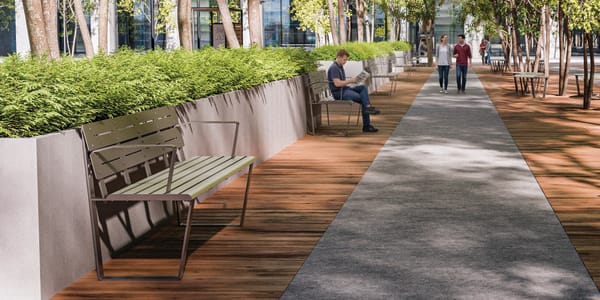

Introducing Avenue Form – our new collection built to meet these challenges head-on.
Built for cities. Made for generations. Avenue Form reinterprets traditional urban design through a contemporary, place-focused lens. Designed and made in Australia, it reflects local craftsmanship, enduring materials and the resilience today’s urban environments demand. With refined detailing, inclusive ergonomics and flexible curved configurations, Avenue Form helps councils and specifiers create site-responsive public spaces that connect people, landscape and community. Low-maintenance finishes, AS-compliant options and long-term durability ensure it performs as well as it looks - today and for decades to come.
Explore the Avenue Form collection or download the brochure today.