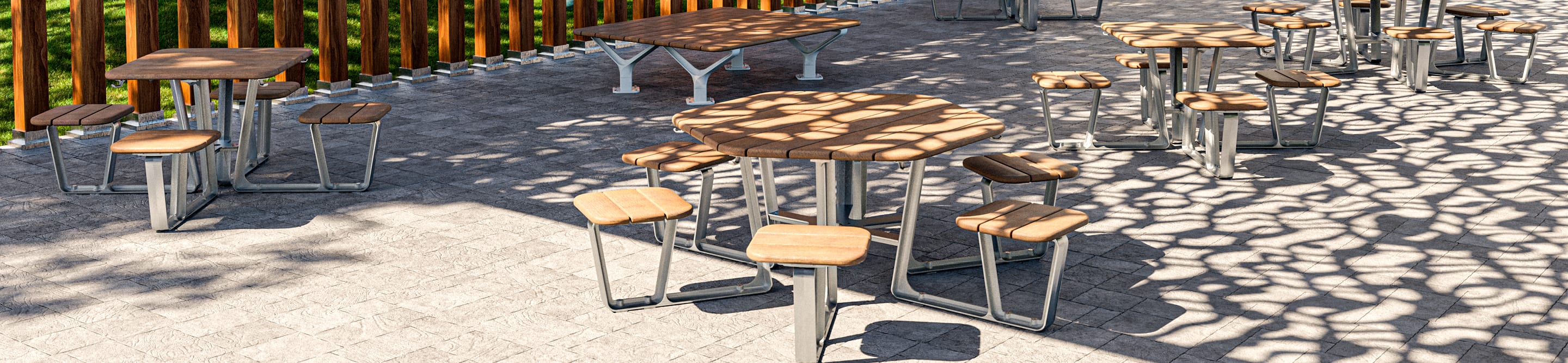
The best public spaces feel intuitive. People naturally understand where to move, where to pause, where to gather and where to find a moment of their own.
That ease is the result of considered design. In parks, civic spaces, retail precincts, campuses and mixed-use developments, the selection and placement of public furniture can shape how people experience a place, influencing movement, comfort, connection and how long they choose to stay.
The best outcomes come when every element has a clear purpose, responding to the people using the space, the activities taking place and how the environment needs to perform over time.
Key takeaways
Start with the people who will use the space.
Give people different ways to sit, gather and spend time.
Consider accessibility, shade and circulation early.
Look beyond seating to the full public-space experience.
Choose materials with maintenance and longevity in mind.
Use furniture to strengthen the character of the place.
Start with the People Who Will Use the Space
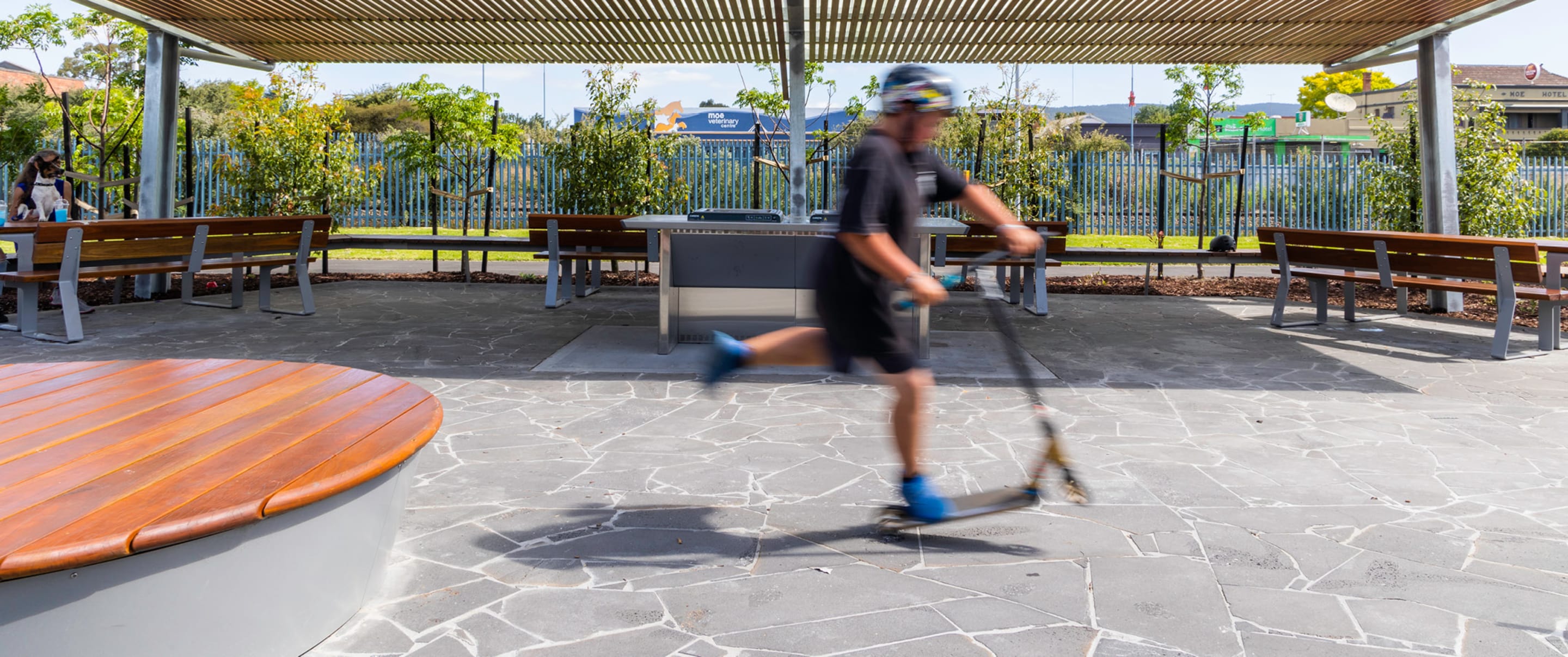
Before deciding on a bench, table or stool, it helps to understand what people will actually be doing there. A neighbourhood park used by families will have different needs from a university courtyard, a shopping centre or a busy civic plaza.
Think about how long people are likely to stay and whether they are resting, waiting, eating, working or socialising. It is also important to consider older people, children, people with limited mobility and anyone moving through the space with a wheelchair, pram or mobility aid.
A useful way to test the design is to ask three simple questions: Can people get there? Can they stay comfortably? Can they join in? This keeps the focus on everyday use rather than simply filling available space with furniture.
Use Furniture to Support Different Behaviours
Different furniture arrangements naturally encourage different ways of using a place. Park bench seats positioned along a path may give someone a place to rest or watch the activity around them, while grouped seating can make conversation feel more natural.
A commercial table can support lunch, study, informal meetings or longer social visits. Commercial bar stools can suit more casual settings where people may only stop for a shorter period. In many public spaces, the strongest solution is not one furniture type, but a mix that gives people some choice.
Furniture approach | What it can support |
Linear benches | Resting, waiting and people-watching |
Grouped seating | Conversation and social interaction |
Communal tables | Dining, working and gathering |
Individual seating | Quiet breaks and personal space |
Mixed layouts | Different users and activities throughout the day |
botton+gardiner’s Prospect Collection takes this idea a step further by treating public furniture as a coordinated system. Benches, seats and bollards are designed to complement one another, bringing consistency and rhythm to a streetscape while supporting the way people pause, gather and move through the space.
As a commercial furniture supplier, botton+gardiner brings this broader thinking across seating, tables and public-space amenities rather than treating each product as an isolated object.
Get Placement, Comfort and Accessibility Right
Even a well-designed seat can miss the mark if it is positioned in full summer sun or disconnected from the activity people want to be near. In Australian public spaces, shade, heat, seasonal sun and exposure all influence whether someone chooses to stop and stay.
Placement should consider:
Summer shade and winter sun
Shelter from wind
Views and surrounding activity
Clear pedestrian circulation
Easy wheelchair and pram access
Appropriate space around tables and seating
Backrests and armrests where additional support is useful
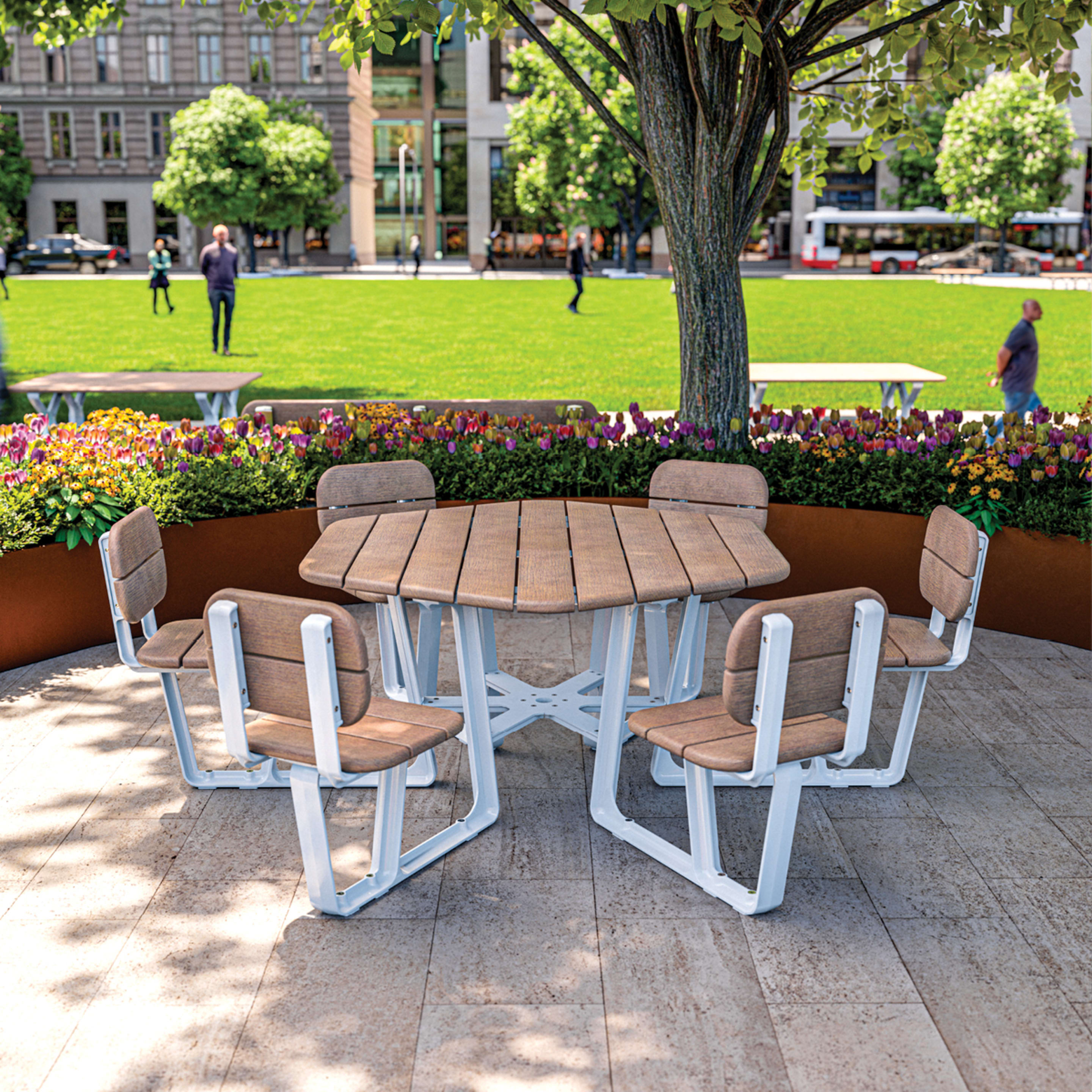
Accessibility also comes down to the furniture itself. The Urban Tri Table, for example, rethinks the traditional picnic-table format with an irregular hexagonal form, softened corners and generous clearances. The open arrangement is designed to make it easier for wheelchair users, prams and highchairs to join the table, while its radial layout creates a natural focal point for conversation.
That is a useful reminder that inclusive design does not have to feel separate from the wider design language. When accessibility is considered from the beginning, it can become part of how the space works for everyone.


Choose Furniture That Can Handle Everyday Use
Public furniture needs to perform in the conditions it is specified for. From sun, rain and snow to dirt, frequent cleaning and heavy daily use, the demands of the site can have a significant impact on how furniture performs and looks over time.
That is why choosing commercial outdoor furniture is not just about appearance. The site and local climate need to be part of the decision too.
Before specifying, it is worth considering:
How will the material respond to UV and weather?
Is the furniture easy to clean?
Can damaged parts be repaired or replaced?
Will water drain properly?
How will the finish hold up in a high-traffic area?
What maintenance will be needed over time?
For some projects, snow and freeze-thaw conditions will be a major concern. In others, heat, coastal air or strong UV exposure may be more important.
botton+gardiner combines Australian design experience with North American manufacturing in Dallas, Texas. For U.S. architects, landscape architects, municipalities and developers, that means working with a trusted brand focused on furniture for real commercial and public environments.
Think Beyond Seating to the Full Public-Space Experience
A useful community space needs more than benches and tables. Someone visiting a park or precinct may arrive by bike, refill a water bottle, sit down for lunch and need somewhere to dispose of rubbish before they leave.
That makes supporting amenities part of the overall experience:
Public bike racks can support active transport while keeping bikes clear of pedestrian routes.
Public drinking fountains add practical amenity to parks, recreation areas and busy precincts.
Commercial bins help manage waste and make high-use spaces easier to maintain.
Planting, shade, sightlines and wayfinding help connect these elements into the wider landscape.
These details work best when they are considered together. A table in the shade with drinking water and a bin nearby is likely to be much more useful than the same table sitting alone in an exposed corner.

Choose Materials for Long-Term Community Use
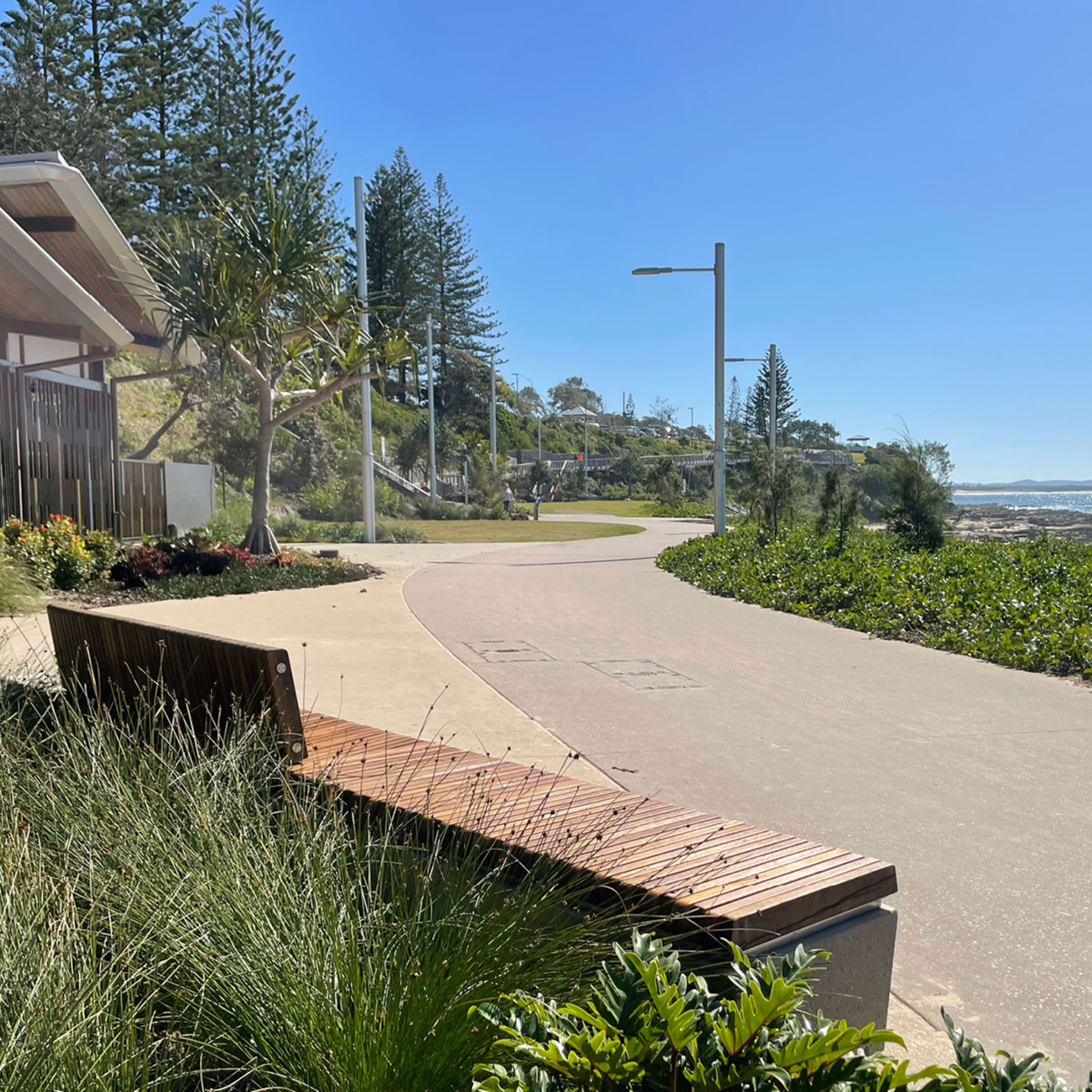
Public furniture has to keep working long after the opening-day photos have been taken. Australian conditions can expose furniture to strong UV, heat, rain, humidity, coastal air and constant daily wear, so material choices need to be made with the long term in mind.
For specifiers and asset managers, it is worth asking:
How will the material respond to the site's exposure?
How often will it need cleaning or maintenance?
Can individual components be repaired or replaced?
Does the material contain recycled content?
Can it be recycled again at the end of its useful life?
Has it been responsibly sourced?
botton+gardiner works with certified and sustainably sourced Australian hardwoods alongside alternatives such as Duraslat, giving designers different material options depending on the site and project requirements. Locally sourced steel and aluminium can also contribute recycled content and recyclability, while local design and manufacturing keep production closely connected to the environments the furniture is being created for.
Good lifecycle thinking also comes down to small design details. The Sorrento Collection uses flat-ended modules that can be clustered, extended or reconfigured as a space changes. Debris gaps help make cleaning easier, while perforated backrests can accommodate integrated backlighting, showing how maintenance, adaptability and design can work together.
The real question is not simply what the furniture costs on day one. It is how well it will continue to look, function and be maintained over the years that follow.
Use Community Public Furniture to Strengthen Connection and Place
Good public furniture design should make it easier for people to use a space in the way that suits them. Some people want to sit with friends or share lunch, while others are looking for somewhere quiet to stop and watch the world go by.
A mix of settings can accommodate both. Face-to-face seating and communal tables encourage interaction, while benches along landscaped edges or quieter corners offer more personal space. That choice matters because not every successful public space needs to feel busy all the time.
Furniture should also respond to the wider public realm. Planting, built form, sightlines, materials and precinct identity all influence whether an element feels like it belongs there. Prospect's coordinated system, the Urban Tri Table's focus on inclusive gathering and the Sorrento collection's adaptable modules each show a different way furniture can respond to real public-space needs without losing sight of design.
Five Questions to Ask Before Specifying Community Public Furniture
Before finalising a furniture plan, it helps to come back to five practical questions:
Who needs to use the space?
What should the furniture help them do?
Can people with different needs access and use it comfortably?
Is it positioned appropriately for climate, movement and surrounding activity?
Will it remain practical to clean, repair and maintain over time?
These questions make it easier to judge whether a furniture choice is genuinely adding something to the public space rather than simply filling an empty area.
Design Public Spaces Around People, Not Products
The most successful community public furniture feels considered because it responds to the people and place around it. Comfort, accessibility, circulation, climate, social interaction, materials and maintenance all contribute to whether a public space continues to work well once it is being used every day.
Looking at seating, tables, bins, bike racks, drinking fountains and other amenities as one connected system creates a stronger foundation for spaces that are welcoming, practical and built to last. Explore botton+gardiners' Australian-designed public furniture collections for spaces shaped around people, place and long-term performance.